Better Taste = More Nutrients: What the Science Says
What if your palate were your best nutritionist? A study of 15 000 tastings found that the sweetest strawberries are also the richest in beneficial compounds (Fan et al., 2021, Horticulture Research).
In a world of ultra-processed foods, we've lost the habit of trusting our senses. Yet millions of years of evolution have fine-tuned our sense of taste to guide us toward the most nutritious foods.
Discover the science behind this link, why it has weakened with the food industry, and how to get back to that natural harmony.
Science confirms that the most flavorful fruits are often the most nutritious. This correlation (r=0.72) exists naturally but weakens with industrial processing. Fresh cold-pressed juices made from ripe fruit preserve this harmony between taste and nutrients.
Taste: A Natural Indicator of Nutritional Quality
Our sense of taste developed over millions of years to identify nutritious foods. It's no accident: sweetness signals carbohydrates (a source of energy), umami points to protein, and richness reveals the presence of fat. This innate ability helped us survive by instinctively choosing the most nourishing foods.
A study published in PMC measured this correlation precisely: r = 0.72 between sweet taste and sugar content in unprocessed foods (PMC8754564, 2022). In statistics, a correlation of 0.72 is considered strong. In other words, the sweeter a fresh fruit tastes, the more natural sugars it actually contains — and often associated nutrients like vitamins and polyphenols.
A word of caution, though: this correlation isn't absolute. Results vary depending on the fruit variety, growing conditions, and stage of ripeness. Science gives us a general trend, not a universal rule.
Volatile compounds, which are responsible for aromas, play a central role. According to Fan et al. (2021), who analyzed more than 15 000 sensory data points from 148 strawberry samples, these aromatic molecules contribute to the perception of sweetness and to consumer satisfaction. These same compounds are often markers of ripeness and nutritional richness.
In practice, this means a fragrant fruit — one you can smell as soon as you pick it up — is generally riper and richer in beneficial compounds than a fruit with no scent. Your nose tells you about nutritional quality before you've even taken a bite.
Ripeness: When Taste and Nutrients Peak Together
Fruit harvested ripe contains more antioxidants, vitamins, and polyphenols. Why? Because these compounds develop during the final stage of ripening, as if nature were packing in nutrients at just the right moment.
According to Kapoor et al. (2022, BMC Plant Biology), carotenoids and anthocyanins — responsible for fruit's bright colors — develop mainly during ripening. This pigmentation isn't just for looks: it signals the presence of beneficial compounds.
Vitamin C, for example, "contributes to the protection of cells from oxidative stress" (EFSA-authorized claim). Its concentration peaks in fully ripe fruit. Potassium, which "contributes to normal functioning of the nervous system" (EFSA), follows the same logic: a ripe fruit generally contains more of it than one picked green.
A striking example: 50% of an apple's polyphenols are concentrated in its colored skin (Jardins de France / INRAE, 2024). So the deep color of a ripe apple isn't just appetizing — it reflects greater nutrient density.
On the other hand, fruit picked before it's ripe so it can withstand shipping loses out on both counts. Spinach, for example, can lose up to 50% of its vitamin C between harvest and the supermarket (Sante-sur-le-net.com). Less flavor, fewer nutrients: the correlation works both ways.
To learn more about fruit ripening, you can explore the research from the Centre technique interprofessionnel des fruits et légumes (CTIFL) or the nutritional data fromANSES via CIQUAL.
Why the Industry Broke This Harmony
Food processing has gradually pulled taste and nutrients apart. The same study, PMC8754564, shows that the correlation between sweet taste and sugars drops from r=0.72 in fresh foods to r=0.42 in ultra-processed foods.
What explains this break?
Artificial sweeteners create a sweet sensation without the associated nutrients. Our brain senses sweetness, but our body doesn't receive the expected carbohydrates.
Synthetic flavorings mimic the taste of ripe fruit without the bioactive compounds that naturally come with it. A “strawberry-flavored” yogurt can taste like strawberry without containing the antioxidants of a real strawberry.
Pasteurization destroys heat-sensitive vitamins (especially vitamin C) while preserving sweet taste. A pasteurized juice keeps some of its flavor, but not all of its nutritional value.
A broader picture: according to a study published in MDPI Foods (2024), commercial fruits have lost between 25 and 50% of their nutrient density over the past 50 to 70 years. Varieties selected for yield and for holding up during shipping were often bred at the expense of their flavor and nutritional profile.
Some nuance is important here: these figures are averages across many varieties. Some growers, especially those who sell locally and directly, still grow traditional varieties whose nutritional profiles have been preserved. The decline isn't inevitable. It comes down to a choice of farming model.
The full study on how food processing affects the perception of nutrients is available on PubMed Central for anyone who wants to dig deeper into the research.
How to bring flavor and nutrients back together
The good news? It's possible to reconnect with this natural link.
Choose seasonal, local fruit. Buying local often means fruit harvested at peak ripeness, without the constraints of long-distance shipping. According to CTIFL (2024), seasonality and short supply chains are among the key factors for flavor and nutritional quality.
Trust your senses. Fruit that's colorful, fragrant and slightly soft to the touch is usually ripe, which is when flavor and nutrients peak together.
Avoid products with added flavorings or sweeteners. These ingredients trick your taste buds without providing the nutritional benefits that would normally come with those flavors.
Choose cold-pressed over pasteurized. Pasteurization may extend shelf life, but it degrades heat-sensitive vitamins. A cold-pressed juice, kept refrigerated and enjoyed within 7 days, better preserves its nutrients (Aprifel). The difference is noticeable: while a pasteurized juice can keep for several months, a cold-pressed juice keeps for about 7 days. That short shelf life is precisely a sign of its freshness and nutritional integrity.
At Joy Juice, from our workshop in Grasse, we select fruit picked at peak ripeness, when flavor and nutrients are at their best. Cold pressing preserves the balance that pasteurization destroys. Every bottle is a direct expression of the fruit, with no compromise on quality.
Variety of flavors reflects nutritional diversity
Each flavor corresponds to a family of nutrients. According to a study published in Frontiers in Nutrition (2024), the bioactive compounds in fruits and vegetables are directly linked to their sensory attributes and their taste-active molecules.
The sweetness of apples signals the presence of polyphenols. The mellow orange notes of carrots reflect their beta-carotene content (8285 µg per 100g according to CIQUAL). The heat of ginger reveals its gingerols. The tartness of lemon points to its vitamin C. The red-fruit notes of raspberries and blackcurrants hint at their anthocyanins.
So a multi-fruit juice offers a broader nutritional range than a single-ingredient one. Balanced flavors naturally point the way to nutritional balance.
Here are a few flavor-nutrient pairings worth knowing:
- Natural sweetness (apple, grape) → polyphenols, soluble fiber
- Orange notes (carrot, apricot) → beta-carotene, a precursor of vitamin A
- Tangy flavor (lemon, orange) → vitamin C, which "contributes to the reduction of tiredness and fatigue" (EFSA)
- Spicy notes (ginger) → gingerols, characteristic aromatic compounds
- Red-purple notes (raspberry, blackcurrant) → anthocyanins, pigments whose properties are being studied
That's the philosophy behind our creations:
- Sunrise Shell (Apple + Carrot + Ginger) — 3 distinct flavors, 3 complementary nutritional profiles. The sweetness of apple brings its polyphenols, carrot its beta-carotene (a precursor of vitamin A), and ginger its spicy notes.
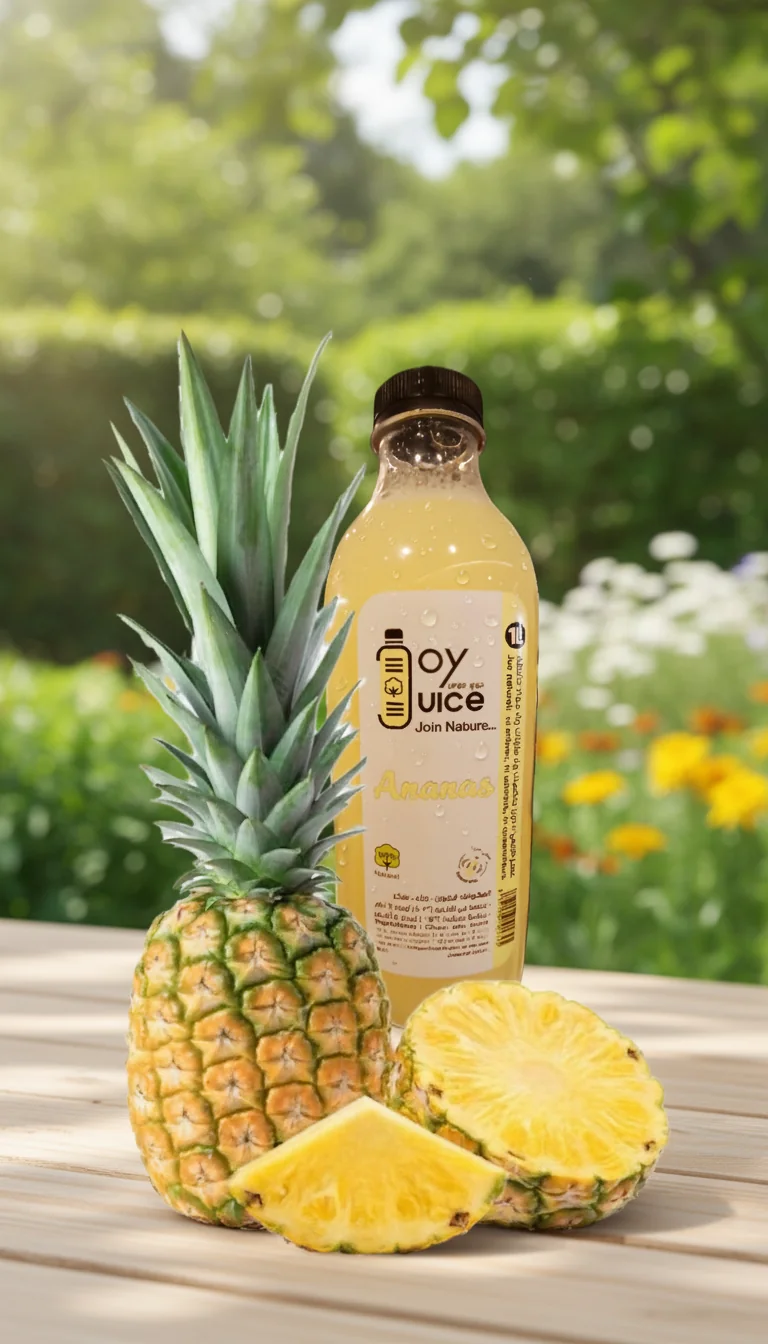
- Autumn Energy (Pineapple + Orange + Turmeric) — The tropical tang of pineapple and orange provides vitamin C, which "contributes to the reduction of tiredness and fatigue" (EFSA). Turmeric adds its signature warm note.
- Red Citrus (Raspberry + Blackcurrant + Lemon) — Red berries are naturally rich in anthocyanins (the pigments responsible for their color), while lemon rounds things out with its vitamin C.
FAQ
Is sweeter fruit always more nutritious?
Not always, but the correlation is strong in fresh, unprocessed fruit (r=0.72 according to PMC8754564). Natural sugars develop alongside polyphenols and vitamins as fruit ripens. Watch out for products with added sugars, which distort this signal.
Does fruit juice lose its vitamins quickly?
Vitamin C is sensitive to oxidation and heat. A pasteurized juice loses a significant share of its vitamins. A cold-pressed juice, kept refrigerated and enjoyed within 7 days, better preserves its nutrients.
Why does supermarket fruit have less flavor?
It's often harvested before it's ripe so it can withstand shipping. But it's during the final stage of ripening that both aromatic compounds AND nutrients develop. The result: less flavor AND fewer vitamins.
How can you tell if fruit is ripe and nutritious?
Trust your senses: bright, even color, a strong aroma and a slightly soft texture. These signs point to peak ripeness, when flavor and nutrients peak together.
In short
- ✅ Science confirms it: flavor and nutrients are naturally linked (correlation r=0.72)
- ✅ Industrial processing weakens this link, so choose fresh and local
- ✅ A cold-pressed multi-fruit juice = a variety of flavors = a broad nutritional range
Want to rediscover this natural balance? Our juices are cold-pressed in Grasse from fruit selected at peak ripeness. The Sunrise Shell (apple, carrot, ginger) and theAutumn Energy (pineapple, orange, turmeric) capture this philosophy: distinct flavors that balance each other, reflecting their complementary nutritional richness.
The information in this article is provided for educational and informational purposes only. It is in no way a substitute for professional medical advice. Consult a healthcare professional with any questions about your diet.
This article follows our editorial guidelines and EFSA recommendations on health claims.
Sources
- Fan et al. (2021), “Strawberry sweetness and consumer preference are enhanced by specific volatile compounds”, Horticulture Research. DOI: 10.1038/s41438-021-00502-5
- PMC8754564 (2022), “Taste of Modern Diets: The Impact of Food Processing on Nutrient Sensing”, PMC
- Kapoor et al. (2022), “Fruit ripening: dynamics and integrated analysis of carotenoids and anthocyanins”, BMC Plant Biology. DOI: 10.1186/s12870-021-03411-w
- MDPI Foods (2024), “Nutritional Decline in Commercial Fruits”. DOI: 10.3390/foods13060877
- Frontiers in Nutrition (2024), “Bioactive compounds, sensory attributes, and flavor perceptions”. DOI: 10.3389/fnut.2024.1427857
- Jardins de France / INRAE (2024) — Apple polyphenols
- Sante-sur-le-net.com — Vitamin C loss in spinach
- CIQUAL ANSES — Nutrition data
- Aprifel — Ripeness and polyphenols
- CTIFL (2024) — Fruit quality criteria